
Best Ways to Brew Coffee at Home
How to Make Coffee as Good as a Coffee Shop at Home
Most people assume that great coffee only happens at a coffee shop. The right equipment, the trained barista, the whole setup. But the gap between what you brew at home and what you drink at your favorite cafe is smaller than you think. You do not need a $3,000 espresso machine or barista certification. Learning how to make coffee well at home really comes down to understanding three variables and controlling them every single time. This guide breaks down exactly how to make coffee at home that genuinely competes with what you would pay $6 for down the street.
What is Coffee Brewing and Why it Matters
Coffee making is a simple act with a lot of moving parts. At its core, brewing is the process of passing hot water through ground coffee to extract flavor, oils, and aroma. How you control that process determines whether your cup tastes alive or flat. Water temperature, grind size, and the ratio of coffee to water are the three variables that separate a good cup from a forgettable one. Get those right and almost any brewing method will produce something worth waking up for.
Key Variables of Brewing Coffee: Water, Ratio, and Grind Size
Before you touch your grinder or your kettle, it helps to understand what you are working with. There are three variables every home brewer needs to know.
-
Water quality and temperature. Coffee is over 97% water. If your water tastes off, your coffee will too.
-
Coffee to water ratio. This controls strength and balance.Too much coffee can make the cup overly strong, while too little can make it weak. . Every brewing method has a grind size that works best for it.
-
These are not complicated ideas. They just require consistent attention, especially when you are starting out. Most people who struggle to brew coffee at home are missing control over one of these three things, and fixing even one of them changes the cup completely.
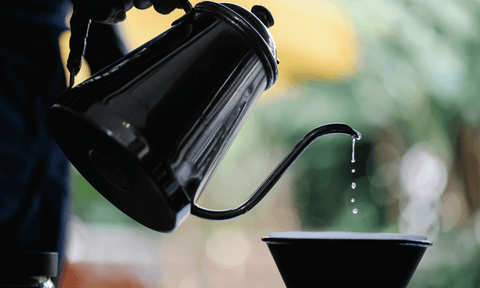
Importance of Water Quality and Ideal Temperature Range
A lot of people overlook water quality when thinking about how to brew better at home. They upgrade their coffee, try a new brewing device, and still end up with a cup that is missing something. Often, the water is the issue.
Start with clean, filtered water. Tap water with a strong smell or taste will carry that into your brew. Reverse osmosis water works well because it is consistent. Spring water can also produce a nice result, though the mineral content varies brand to brand, which means your cup will too. Pick one water source and stick with it.
For temperature, the sweet spot sits between 195F and 205F. Most automatic drip machines land somewhere in that range. If you are brewing manually, bring your water to a boil and let it rest for 30 to 45 seconds before pouring. That brief wait brings it into the right range without any guessing.
Coffee to Water Ratio and Measurement
This is where most home brewers go wrong. They eyeball it every time and wonder why the cup tastes different day to day.
The standard starting ratio for coffee making at home is 1:15 to 1:18. That means for every 1 gram of coffee, you use between 15 and 18 grams of water.
A kitchen scale gives you consistency that no scoop can match. If you prefer not to weigh, use the same scoop every single time and be aware that darker roasts are less dense, so the same scoop holds less coffee by weight than a lighter roast.
Ratio also depends on the coffee itself. A bold dark roast like our Cubano, with full body and syrupy smokiness, works well at the stronger end around 1:15. A delicate light roast like our Colombia Santa Maria, with notes of peach and caramel, shines closer to 1:17.
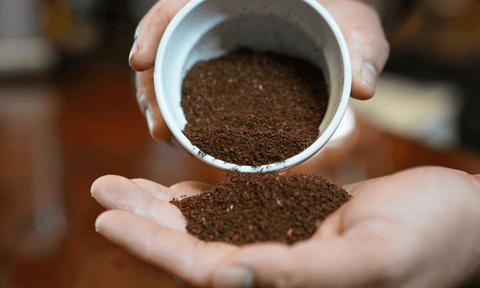
How Grind Size Affects Brewing
Grind size controls how fast water passes through the coffee and how much flavor gets extracted. These two things are directly linked.
A coarser grind has larger particles, so water flows through faster and extraction happens more slowly. That is why French press uses a coarse grind and brews for 4 to 5 minutes. A finer grind does the opposite. Espresso uses a very fine grind because water is pushed through at high pressure in under 30 seconds.
|
Grind |
Best For |
Brew Time |
|
Coarse |
French press, cold brew |
4 to 12 hours |
|
Medium |
Drip machines, pour over |
4 to 6 minutes |
|
Fine |
Espresso, moka pot |
25 to 35 seconds |
When you match your grind to your method, you give the coffee a fair chance to taste the way it’s supposed to. Our Mayan Blend, with its sweet floral undertones, chocolate notes, and smooth clean finish, brewed in a drip machine at medium grind will taste completely different and better than the same coffee ground too fine or too coarse.
Brewing Coffee Using the Drip Method
The drip machine is where most people brew coffee at home, and where most common mistakes happen. Too fine a grind causes slow drainage, over-extraction, and a bitter harsh cup. Too coarse and the water rushes through without picking up enough flavor, leaving something thin and sour.
The right grind for a drip machine is medium. It looks like coarse sand. Water passes through at the right pace, extraction is even, and the cup comes out balanced. Most preground coffee labeled drip or medium grind falls in this range. If your machine has a temperature setting, aim for 195F to 205F.
Step-by-Step Guide to Brew Coffee Like a Coffee Shop
Here is exactly how to make coffee at home on a standard drip machine.
What you need:
Drip coffee maker, filtered water, medium-ground coffee, kitchen scale or measuring scoop, clean filter.
Step 1. Fill your machine with filtered water. Use 1:15 to 1:17 ratio as your guide. For a standard 12-cup pot, roughly 1,800ml of water, that is about 100 to 120 grams of coffee.
Step 2. Set your grind to medium. If buying pre-ground, look for drip grind on the label.
Step 3. Place a clean filter in the basket, add your measured coffee, and give it a gentle shake so the grounds settle evenly.
Step 4. Start the machine, Set temperature to 195F - 205F if your machine allows it.
Step 5. Pour immediately once brewing finishes. Coffee left on a hot plate for more than 20 to 30 minutes starts tasting stale and bitter regardless of how good the coffee was to start.
Step 6. Taste it before adding anything. This is how you learn what your variables are producing. Adjust the ratio or grind on your next brew until you land where you want to be.
Common Coffee Brewing Mistakes and How to Fix Them
Most bad cups come from one of these five mistakes.
Stale coffee. Coffee loses flavor within a few weeks of the roast date. Buy recently roasted and store it in an airtight container away from heat and light.
Wrong water and temperature. Boiling water at 212F over-extracts fast and turns the cup bitter. Too cool and it under-extracts, leaving it sour. Stay in the 195F to 205F range.
Wrong grind for your method. If your drip coffee tastes bitter, go coarser. If it tastes weak and watery, go finer. Small adjustments make a real difference.
Inconsistent ratios. Eyeballing your coffee every morning means a different cup every morning. A consistently used scoop beats randomly spooning grounds into the basket.
Letting coffee sit too long. Transfer to a thermal carafe if you are not drinking it right away.


